ARC
Venancio Mbande Orchestra: Timbila Ta Venancio
Venancio Mbande Orchestra: Timbila Ta Venancio
FORMAT (CD, LP, DVD?)
FORMAT (CD, LP, DVD?)
COMPACT DISC
Couldn't load pickup availability
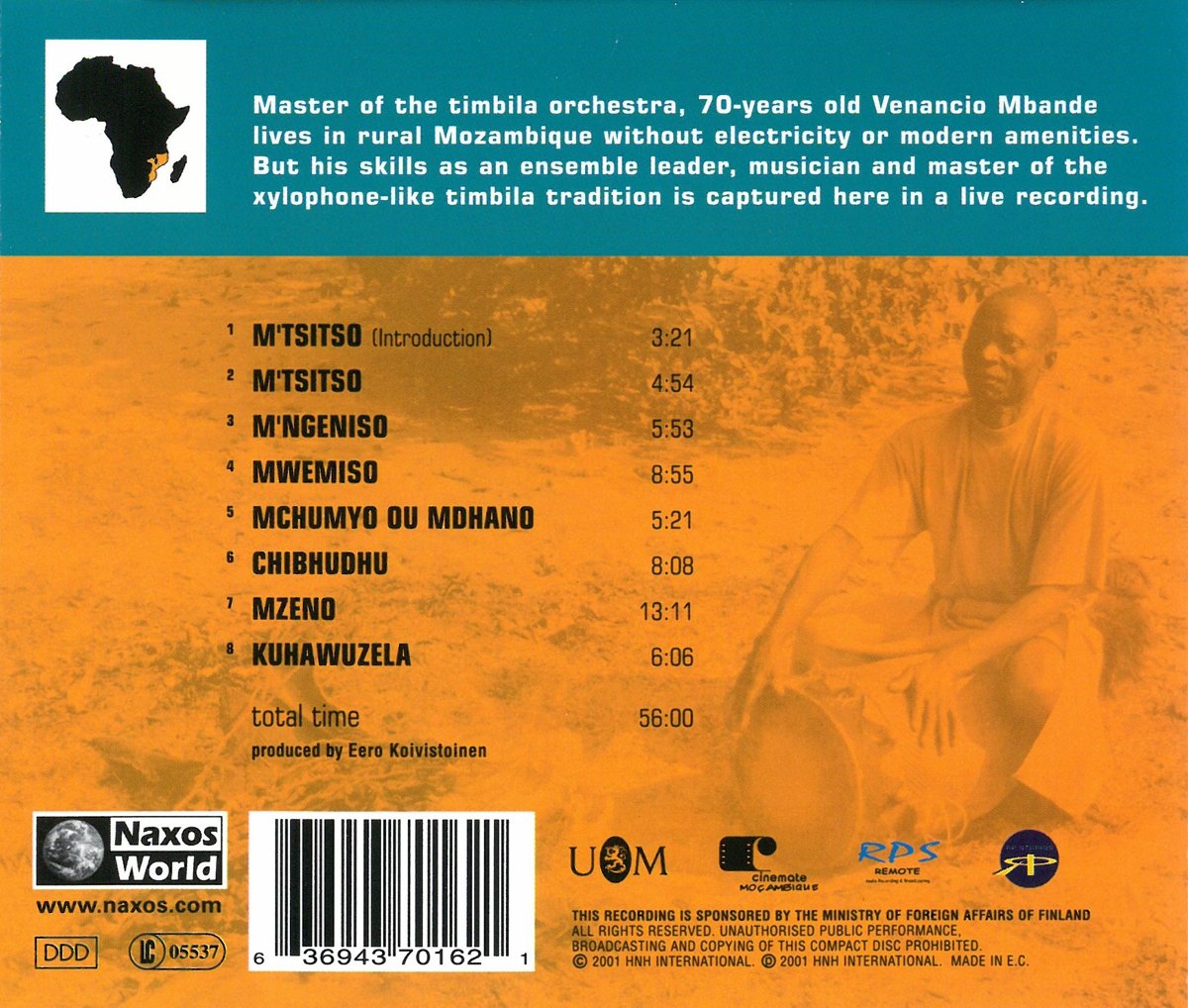
Timbila is a xylophone-like instrument and the name of the rhythmic music that comes from the Chopi people of rural Mozambique. One of the last living masters of the timbila drum orchestra is Venancio Mbande. He is 70 years old, lives in a small village without electricity or modern amenities, but his skills as an ensemble leader, musician and master of the timbila tradition are undeniable. Timbila is a music that dates back hundreds of years (first documented by a Portuguese missionary in 1560). The foremost characteristic of timbila is the instrument. The Chopi people's mbila, singular for timbila, is a unique instrument in the music of the Bantus of the Southern Africa continent. The xylophone and marimba are the Western variants of this remarkable instrument, born much later than it's timbila ancestor. Made from the wood of the Mwenje tree, the timbila comes in different types depending on their tone. It uses heptatonian tuning which means that an octave is divided into seven roughly equal intervals. The music itself is a vibrant mesh of rhythms and whistles, dancing and drumming. A group orchestral suite, Ngodo, is usually renewed about every two years. In general, the topics of the lyrics deal with current issues. But it always starts with an introduction by a solo timbila. For this live field recording session, Mbande's orchestra took it's customary places in the shade of two big trees. In front of them was an open square for the dancers. Like the visual splendor of South Africa's Zulu dances, it is a remarkable feat to witness and hear. On the whole, Ngodo resembles music theatre and ballet. However, the leading role in this colourful form of art is the music.

1 M'tsitso (Introduction)
2 M'tsitso
3 M'ngeniso
4 Mwemiso
5 McHumyo Ou Mdhano
6 Chibhudhu
7 Mzeno
8 Kuhawuzela